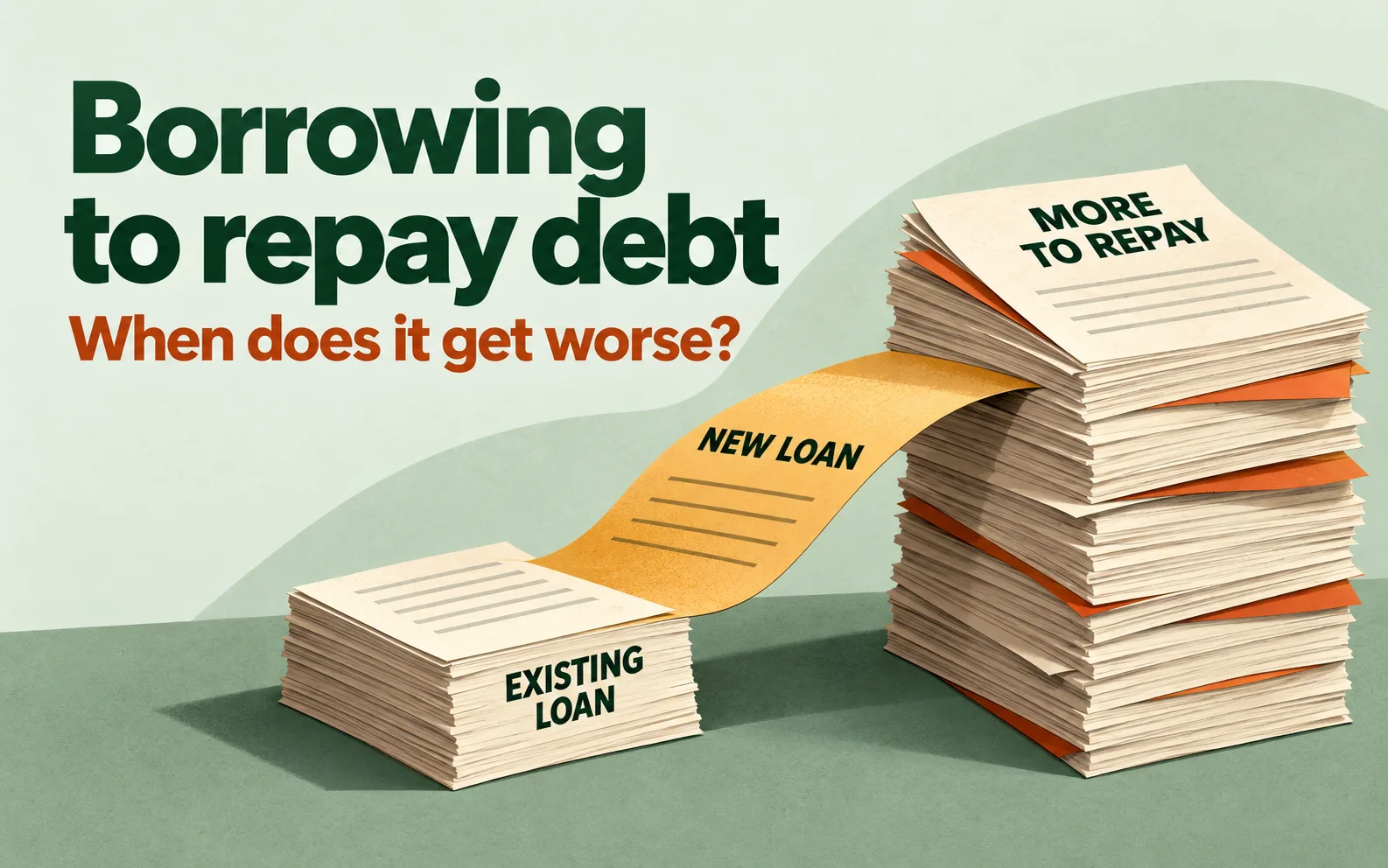
If your loan repayment is due on Friday and your salary has been delayed, another loan can look like a way to get through the week. You want to settle what you owe and stop worrying about the reminder.
It is understandable to focus on getting that payment made. But next payday still has to cover your living costs, alongside whatever you have just borrowed.
Taking a loan to pay off another loan can help if the replacement offers a workable route out of debt. It makes things worse when the total cost or risks increase without creating repayments you can sustain. The decision needs to work beyond the day the money arrives.
What will the new loan actually settle?
Replacing an existing loan with a new borrowing agreement is refinancing. Combining several debts into a single replacement loan is debt consolidation. Both involve debt you still have to repay; their usefulness depends on the terms and your circumstances.
There is an important difference between clearing an old loan completely and borrowing enough for its next instalment. In the second situation, you still have the old loan’s remaining repayments, plus the new borrowing. That distinction matters more than the name attached to the offer.
A smaller instalment can come with a bigger total bill
A lower payment can create welcome breathing room. Check how many payments you will be making before deciding whether it also saves money.
Suppose your current loan has six monthly payments of ₦50,000 remaining: ₦300,000 altogether. Your lender confirms that ₦270,000 would settle it today, including any settlement charges.
A new offer records a ₦285,000 loan. A ₦15,000 fee is deducted, leaving ₦270,000 to clear the old debt. The new agreement requires 12 monthly payments of ₦27,500, with no additional charges in this example.
| From today | Keep the current loan | Take the replacement |
|---|---|---|
| Monthly repayment | ₦50,000 | ₦27,500 |
| Payments remaining | 6 | 12 |
| Total future repayments | ₦300,000 | ₦330,000 |
You reduce the monthly payment by ₦22,500, but pay ₦30,000 more overall and remain in debt for six additional months. The deducted fee is already reflected in the new loan and its repayments; adding it to ₦330,000 again would count it twice.
The extra cost deserves a conscious decision. If the existing payment is unmanageable, a sustainable replacement may still be worth considering. But describe the trade-off accurately: you are paying more for a different repayment schedule.
The household shortfall may still be there
Return to that ₦27,500 payment. Suppose you take home ₦250,000 and need ₦230,000 for essential spending and provisions for bills such as annual rent. You have ₦20,000 available before debt repayments.
The smaller instalment still leaves a ₦7,500 monthly gap. Unless something changes, completing the repayment could leave you short elsewhere or looking for another loan.
Build the budget around income you can reasonably rely on. If freelance earnings vary, test a quieter month rather than assuming every month will match your best one. Include costs that arrive less often than your salary.
A delayed payment and a recurring shortfall need different responses. For a temporary delay, establish when the income is likely to arrive and what it must cover. For a continuing deficit, identify what spending, income or repayment arrangement could realistically change. You may already have cut what you can; that is useful information when discussing an affordable arrangement with a lender.
Borrowing for one payment can leave two loans running
Consider a different situation: a new loan covers this month’s instalment but leaves the original balance outstanding. Next month, both lenders may expect payment.
Before accepting, put every remaining repayment on one calendar. Include any period when the old and new schedules overlap. If your plan for paying the new lender depends on another application being approved, you have not yet identified a dependable repayment source.
The same concern applies after a full consolidation if you immediately borrow again from the old provider. You can end up rebuilding the debt you just replaced.
Keep the amount tied to the debts you intend to settle. An offer of extra spending money is still extra borrowing, even when it arrives alongside what feels like a fresh start.
Compare both choices from the same starting date
Use the date you expect to switch. Request a settlement quote covering that date, including the charges needed to close each old loan. Compare it with the remaining schedule if you stay.
Then ask the proposed lender for the cash available after deductions, every repayment amount and date, the final payment, and any charges outside that schedule. Check whether the interest rate can change.
Write down two totals:
- Staying: all payments still due under the existing arrangement.
- Switching: all new loan repayments, plus switch-related payments funded from your own money, plus repayments on any old debt left outstanding.
Those personal payments could include a settlement shortfall or a fee paid separately. Avoid adding the old settlement amount again if the new loan funds it and you have already counted the new repayments. Money paid before this comparison date belongs to neither future total.
Keep the comparison focused on the same debt; a larger loan that also funds new purchases is a different decision. After settlement, retain payment evidence and obtain confirmation that the intended debts have been cleared.
Sources and review
Last editorial source check: October 29, 2026. Source research is complete for this Fincalcz draft; Fincalcz Editorial Team approval is pending. It provides general education and is not individual professional advice
- Refinancing and consolidation terminology is checked against ASIC Moneysmart’s explanation and MoneyHelper’s borrowing guidance; consolidation is also explained by National Debtline.
- Longer repayment periods, fees and the difference between monthly relief and overall savings are checked against CFPB consolidation guidance and MoneyHelper’s consolidation guide.
- Budget checks and avoiding unnecessary additional borrowing are informed by National Debtline’s affordability guidance and IFEC’s responsible borrowing guidance.
- Risks from securing existing debts against assets are checked against ASIC Moneysmart’s collateral warning and StepChange’s secured-loan explanation.
- Contacting creditors and considering advice before further borrowing are supported by CFPB guidance on repayment difficulties and National Debtline’s consolidation guidance.
- Requests for clear terms and charges draw on CBN consumer education for bank customers and CFPB guidance on personal-loan fees. The naira examples are original calculations using hypothetical terms.
Last updated: October 29, 2026