Getting a loan approval message on your phone takes minutes, but repaying a poorly structured loan can strain your income for months. Whether you are considering a salary advance from a commercial bank, working capital from a microfinance bank, or an instant facility from a digital lending app, knowing the right questions to ask before taking a loan protects your income, your credit record, and your privacy.
Before you sign an offer letter or tap "Accept" on a loan app, work through the 12 questions below. Each question includes the practical rule to check, the Nigerian regulatory standard where applicable.
Every amount and scenario below is hypothetical. They illustrate decisions and calculations, rather than actual lender offers or anyone's personal experience.
1. What problem will this loan actually solve?
Write down the expense, its deadline and the consequence of waiting. Then consider whether you could save towards it, reduce the amount or negotiate a payment arrangement.
For example, repairing equipment you need for paid work has a different urgency from replacing equipment that still does the job. Neither description tells you whether the repayments are affordable; it helps you decide whether borrowing deserves consideration at all.
If the loan will cover an ordinary monthly shortfall, examine what will fund next month's expenses and the new repayment. Include that answer in your plan.
2. What amount will actually reach my account?
Separate the amount you need from the lender's maximum offer. Check every deduction before deciding whether the loan will cover the expense.
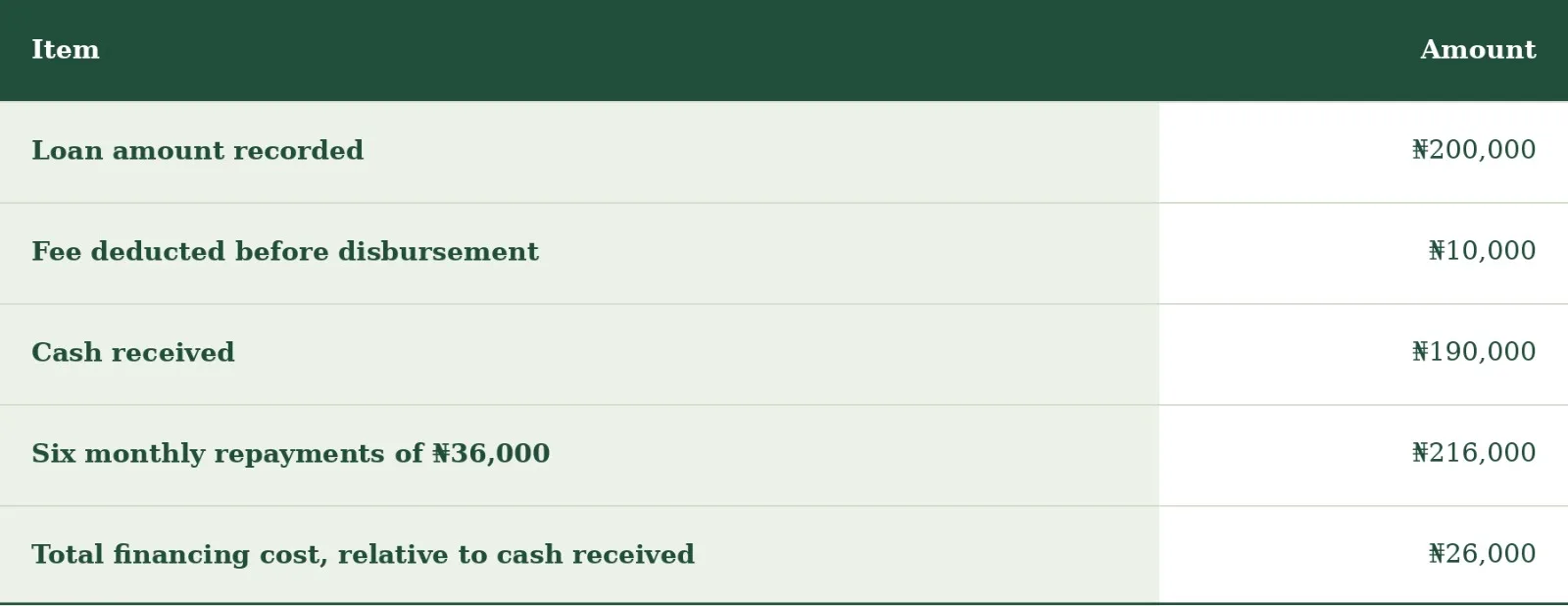
Suppose an offer records a ₦200,000 loan, with a ₦10,000 fee deducted before transfer. You receive ₦190,000. If the bill you need to pay is ₦200,000, you still have a ₦10,000 gap.
Ask for the net disbursement figure in writing. Also establish whether any charge is deducted, paid separately or added to the loan balance. These arrangements involve different cash flows, so keep them separate in your calculations.
3. Who is lending the money, and how can I check them?
Identify the legal company in the agreement, rather than relying on the app's name or its advertising.
For a company claiming a CBN licence, verify that claim directly through official CBN channels. For relevant digital lenders, check the company and app against the FCCPC's published listings, including the status shown. The appropriate checks depend on the institution providing the loan.
For example, if an advert, agreement and payment request show different business names, ask for a clear explanation before proceeding. Record the lender's contact details and complaint process.
4. How much will I pay in total?
Obtain a complete repayment schedule and a breakdown of charges. A monthly payment alone cannot show the whole cost: fees can add to the amount paid for borrowing.
The cost is ₦216,000 minus ₦190,000. That already captures the deducted fee; adding the fee again would double-count it. The example assumes no other payments or charges.
Compare offers using the cash you need, their duration and the complete repayment amounts. The CBN's customer guidance emphasises understanding terms and charges before agreeing.
5. How will the interest be calculated?
Establish the period attached to the rate and whether it can change. A hypothetical 2% monthly rate means something different from 2% annually.
Ask which balance is used when calculating interest: the original loan amount or the unpaid amount. If the agreement uses terms such as flat rate or reducing balance, request a calculation using your actual offer.
Where provided, examine the annual percentage rate, or APR, alongside the repayment schedule and fee breakdown. APR expresses borrowing cost on an annual basis; it is different from simply adding up naira repayments.
6. When does repayment start, and how often?
Get the first due date, every subsequent date and the final payment date. Confirm whether payments are weekly, monthly or due as a lump sum, and how collection works.
Imagine your salary usually arrives on the 28th, while the payment is due on the 25th. Even a manageable amount creates a timing problem unless you already have money available.
If you need a different date, ask before accepting and get any agreed change documented. A convenient date in your calendar does not change the contract.
7. What can my household budget support?
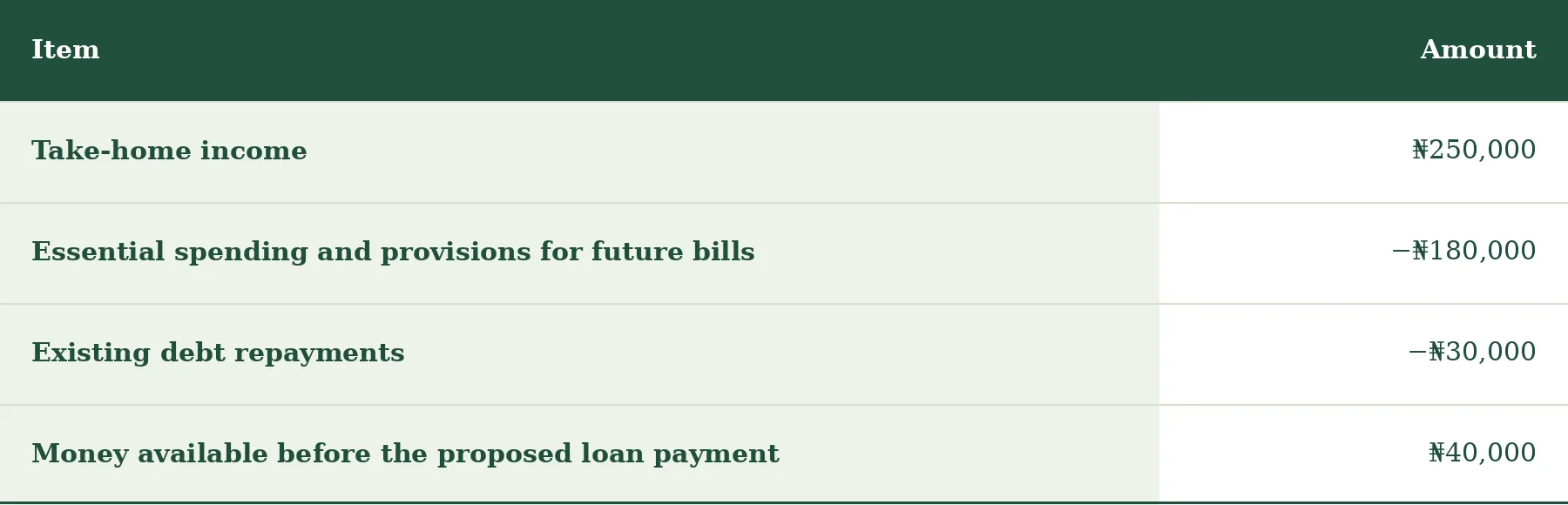
Use your take-home income and current expenses. Include existing debts and money you need to put aside for less frequent bills, such as annual rent or school costs.
Let's take this monthly budget as example:
Before you accept the offer
Write down the cash you will receive, the full repayment total, each due date and the income that will fund each payment. Then check what remains for everyday life and unexpected expenses.If an answer is missing, obtain it before accepting. If the budget fails, revisit the amount, timing or alternatives rather than relying on money you have not secured. Keep this Fincalcz checklist with the offer so you can compare the written terms with your own plan.
Sources and review
Last editorial source check: October 29, 2026. This guide was checked by the Fincalcz Editorial Team. It provides general education and is not individual professional advice.