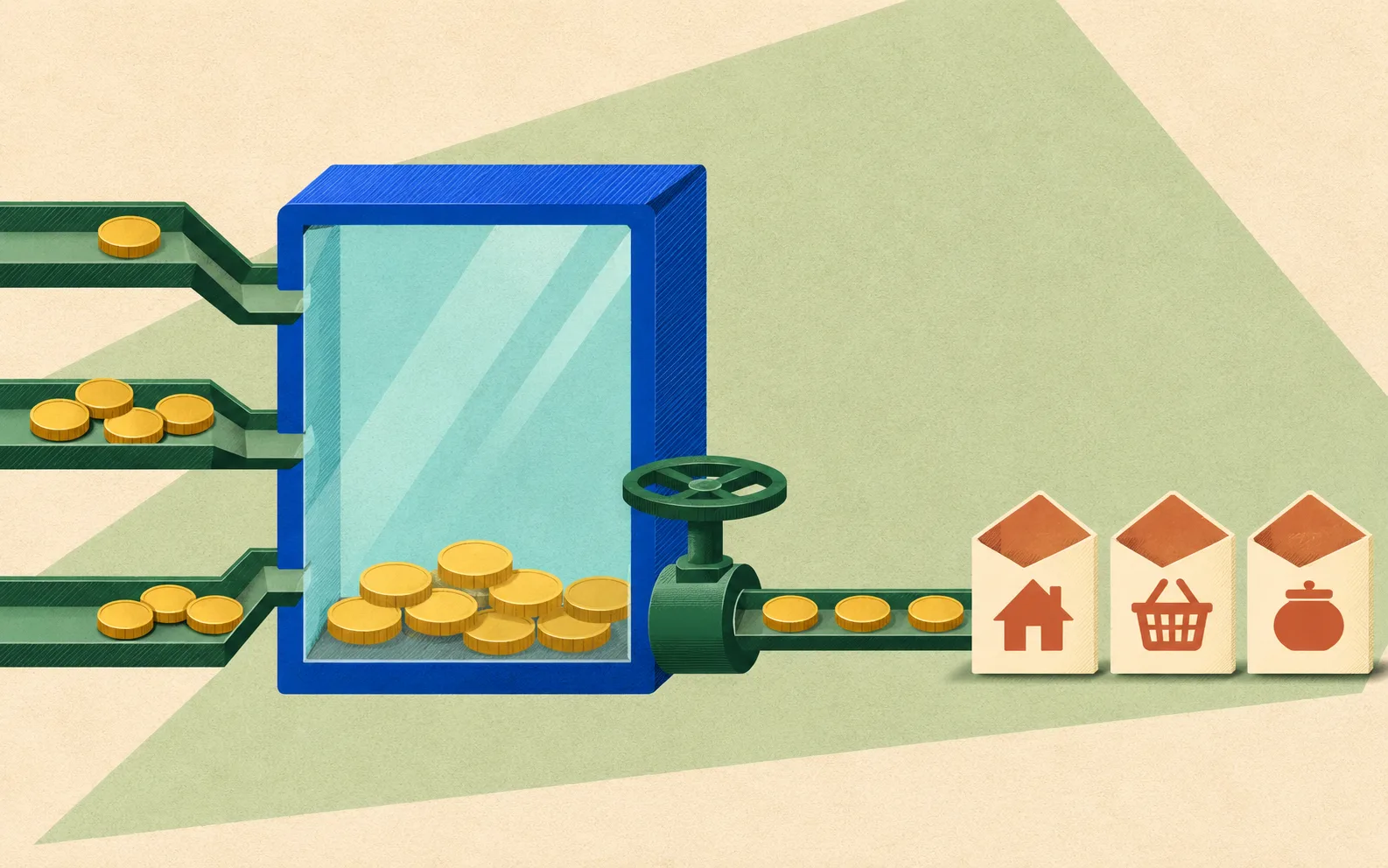
You open your mobile banking app on the 20th of the month and a banner pops up: You are pre-approved for an instant salary loan of ₦1,200,000. Because the bank already receives your monthly salary, the app calculates that you can afford a monthly deduction of ₦150,000 out of your ₦400,000 take-home pay and offers to disburse the cash in three minutes.
Before you tap accept, pause and ask a question your bank's algorithm never asks: Does qualifying for a loan mean your household budget can actually survive the repayment?
For most Nigerian salary earners who pay house rent separately, spending more than 15% to 20% of your net monthly take-home pay on consumer loan repayments is the threshold where financial strain begins, and crossing 33.3% (one-third of your net salary) puts you in the danger zone. While Nigerian commercial banks and payroll lenders routinely approve total loan deductions of 33.3% to 50% of your net salary, those automated checks only measure whether the bank can deduct its money before you touch your pay. They do not leave room for your annual rent savings, food inflation, daily transport, or family obligations.
KEY TAKEAWAYS
- Keep non-housing loan repayments at or below 15% to 20% of net pay: Once you set aside 20% to 30% of your monthly income for annual house rent, keeping all other loan installments below 20% of your net take-home pay protects your cash flow from emergencies.
- One-third (33.3%) is a legal and banking ceiling, not a comfort target: Section 5(7) of the Nigerian Labour Act caps total monthly wage deductions at one-third of monthly wages for covered workers, and banks like Sterling Bank use 33.3% of net salary as a single-loan Debt Service Coverage Ratio (DSCR) limit. Treating that maximum ceiling as a target leaves zero margin for inflation.
- Foreign 36% Debt-to-Income (DTI) rules already include rent: International guidance from the Consumer Financial Protection Bureau (CFPB) and the Federal Deposit Insurance Corporation (FDIC) recommends keeping total monthly debt below 36% of gross income, but roughly 28% of that 36% is reserved for housing, leaving only 8% to 10% for personal, student, and auto loans.
- Short-term 30-day salary advances distort your next payday: Bank salary advances allow you to borrow up to 50% of your net monthly salary for 30 days, deducting management fees, insurance, VAT, and interest upfront and sweeping the entire principal from your very next paycheck.
- Defaulting triggers cross-bank recovery under CBN rules: Under the Central Bank of Nigeria (CBN) Operational Guidelines on Global Standing Instruction (GSI), if you default on a loan at one participating bank, the lender can automatically recover the overdue principal and accrued interest from any personal savings, current, investment, or wallet account linked to your Bank Verification Number (BVN) at other financial institutions.
Why Bank Approval Limits Differ From Your Real-Life Affordability
When you apply for a salary-backed loan, your lender calculates a metric called your Debt-to-Income (DTI) ratio or Debt Service Ratio (DSR).
In international consumer finance, as defined by the Consumer Financial Protection Bureau (CFPB) and the National Credit Union Administration (NCUA), your DTI ratio is all your required monthly debt payments (including your monthly mortgage or rent payment, auto loans, credit card minimums, and personal loans) divided by your gross monthly income before taxes. Under the Federal Deposit Insurance Corporation (FDIC) Money Smart affordability standard, housing costs should stay below 28% of gross income and total debt payments (housing plus all other loans) should not exceed 36% of gross income.
In Nigeria, commercial banks and payroll lenders calculate your limit differently in two ways that can trap an unprepared borrower:
- Nigerian lenders measure against net take-home pay, not gross pay: Your bank looks at the actual Naira amount credited to your salary account after Pay-As-You-Earn (PAYE) taxes, the mandatory 8% employee pension deduction, and any payslip deductions are removed.
- Nigerian bank checks ignore your annual house rent: Because most Nigerian tenants pay rent annually in a single lump sum rather than through a monthly mortgage debit reported to a credit bureau, your bank's computer treats your salary as if you live rent-free. Published lending criteria from Sterling Bank show that salaried borrowers can be approved for a Debt Service Coverage Ratio of 33.3% of net monthly salary on a single loan, and up to 50% of net monthly salary across all active loans if they work for a top-tier ("Category A") employer.
If your bank takes 45% of your net salary at source for loan repayments, and you still have to save 25% of your net salary every month to pay your landlord at the end of the year, 70% of your take-home pay is already gone before you buy cooking gas, pay for transport to the office, or buy a single meal.
3 Questions to Answer Before You Calculate Your Debt Ratio
To get an honest picture of how much of your salary is already spoken for, gather three numbers before using the formula below:
- Are there deductions happening on your payslip before your salary hits the bank? If you belong to a workplace staff cooperative, took an employer car or housing advance, or have an Integrated Personnel and Payroll Information System (IPPIS) deduction as a civil servant, that money is removed before your bank alert arrives. If you leave payslip loans out of your calculation, your true debt ratio will look artificially safe.
- How much must you set aside every month for annual rent and school fees? Divide your annual house rent (plus estate service charges) by 12. Even though your landlord is not a bank, failing to set aside that monthly rent share often forces salary earners to take out an emergency loan when rent renewal arrives.
- Are any of your loans 30-day advances due in a single lump sum? A 12-month installment loan that takes ₦40,000 a month behaves very differently from a 30-day salary advance or digital loan app facility that sweeps ₦150,000 in one go the minute your next salary drops.
How to Calculate Your True Nigerian Debt-to-Income Ratio in 3 Steps
Use your net monthly income (after statutory tax, pension, and health insurance deductions, but before voluntary cooperative or employer loan deductions) to run two quick checks.
Step 1: Add Up Every Monthly Debt Repayment
Include every credit obligation that leaves your payslip or bank account in a 30-day cycle:
- Commercial bank salary loan or asset finance installments
- Workplace cooperative loan deductions and employer salary advances
- Microfinance bank or digital loan app repayments
- Buy-Now-Pay-Later (BNPL) or device-financing installments
Step 2: Calculate Your Pure Debt Service Ratio (Lender's View)
Divide your total monthly loan repayments by your net monthly income and multiply by 100:
Step 3: Calculate Your Housing-Adjusted Debt Ratio (Household Reality Check)
Now add your monthly rent set-aside (annual rent divided by 12) to your monthly loan repayments, divide by your net monthly income, and multiply by 100:
Use the four zones below to see where your current salary stands:
Net Debt Service Ratio (Loans Only) | Combined Ratio (Loans + Monthly Rent Share) | Risk Zone | What It Means for Your Monthly Survival |
0% to 15% | Below 40% | Safe Zone | You can meet loan payments, fund your annual rent pot, cover food and transport, and still build an emergency buffer. |
16% to 25% | 40% to 50% | Caution Zone | Manageable if your job is stable, but rising food or fuel prices will squeeze your discretionary spending. Avoid taking new credit. |
26% to 33.3% | 51% to 60% | High-Risk Ceiling | Hits the statutory one-third wage deduction ceiling under Section 5(7) of the Nigerian Labour Act and standard single-loan bank caps. One unexpected medical or family bill can push you into borrowing again. |
Above 33.3% (Up to 50%+) | Above 60% | Danger Zone | Debt repayments are actively crowding out rent savings, nutrition, or transport. High risk of rolling over short-term loans just to survive until payday. |
Worked Examples: How Different Loan Limits Hit a ₦400,000 Monthly Salary
Numbers on a percentage chart feel abstract until you place them next to a real monthly household budget.
Example 1: Comparing 15%, 20%, 33.3%, and 50% Loan Deductions
Suppose you earn a net monthly take-home salary of ₦400,000.00 in Lagos or Abuja. Before paying any lender, your basic monthly living and rent obligations look like this:
- Monthly Rent Set-Aside (₦1,080,000 annual rent divided by 12): ₦90,000.00 (22.5% of net pay)
- Food, Cooking Gas, and Household Supplies: ₦100,000.00 (25.0% of net pay)
- Work Commute, Fuel, Electricity, and Mobile Data: ₦65,000.00 (16.25% of net pay)
- Healthcare and Capped Family Support ("Black Tax"): ₦35,000.00 (8.75% of net pay)
- Total Essential Non-Debt Living Costs: ₦290,000.00 (72.5% of net pay)
That leaves ₦110,000.00 (27.5% of your net pay) to cover both loan repayments and your emergency savings. Look at what happens to that ₦110,000 breathing room across four common borrowing levels:
Borrowing Level on ₦400,000 Net Salary | Monthly Loan Repayment | Combined Housing + Debt Ratio | Essential Living + Rent Costs | Cash Left for Savings & Emergencies | Monthly Outcome |
15% Safe Target | ₦60,000.00 | 37.5% | ₦290,000.00 | +₦50,000.00 | Healthy: Bills paid, rent funded, and ₦50,000 saved monthly. |
20% Caution Limit | ₦80,000.00 | 42.5% | ₦290,000.00 | +₦30,000.00 | Tight: Manageable, but only ₦30,000 left for unexpected price spikes. |
33.3% One-Third Ceiling | ₦133,333.33 | 55.8% | ₦290,000.00 | -₦23,333.33 | Deficit: You must raid your rent savings or borrow ₦23,333 every month to eat and commute. |
50% Category-A Bank Cap | ₦200,000.00 | 72.5% | ₦290,000.00 | -₦90,000.00 | Crisis: Your entire rent set-aside is wiped out; high risk of loan-app dependency. |
Look at the third row (33.3% One-Third Ceiling). Even though 33.3% is the standard single-loan DSCR threshold used by commercial banks, committing ₦133,333.33 a month on a ₦400,000 salary leaves this household ₦23,333.33 short every single month. Because you cannot skip commuting to work or eating, that ₦23,333.33 shortfall almost always gets pulled out of your annual rent savings, which explains why so many salaried workers end up taking another loan when their landlord asks for rent at the end of the year.
Example 2: The 30-Day Salary Advance Rollover Trap
Multi-month installment loans are not the only threat to your paycheck. Many Nigerian commercial banks offer instant USSD or mobile-app 30-day salary advances (such as FirstBank's FirstAdvance or similar payday products across major banks) that let you borrow up to 50% of your net monthly income until your next payday.
Because the repayment happens in a single lump sum on payday rather than spreading over 12 months, a 30-day salary advance can lock you into a repeating monthly cycle. Look at a modeled scenario where our ₦400,000 earner takes a ₦150,000.00 30-day bank salary advance (37.5% of net pay) using typical published Nigerian commercial bank salary-advance fee terms:
- Upfront Deductions at Disbursement: Based on standard published bank salary-advance terms, the bank deducts a 1.0% flat management fee (₦1,500.00), 7.5% VAT on the management fee (₦112.50), 1.0% flat credit life insurance (₦1,500.00), and 4.0% monthly interest (₦6,000.00) upfront when you take the advance.
- Actual Cash You Can Spend: Out of the ₦150,000.00 facility, ₦9,112.50 is deducted immediately for interest and fees, leaving you with ₦140,887.50 in spendable cash.
- What Happens on Your Next Payday: The moment your ₦400,000.00 salary hits your account, the bank automatically sweeps the full ₦150,000.00 principal first.
- The Next-Month Shortfall: You are left with ₦250,000.00 to survive the entire new month, even though your essential living and rent costs require ₦290,000.00.
- The Rollover Cost Over 12 Months: Faced with a ₦40,000.00 cash deficit in the second week of the new month, many workers immediately dial the USSD code to re-borrow the ₦150,000.00 salary advance again. If you take and repay that same ₦150,000.00 advance every month for 12 months just to plug the hole in your paycheck, you pay ₦109,350.00 in annual fees and interest while still owing the original ₦150,000.00 on your December payslip.
4 Warning Signs That Loan Repayments Are Choking Your Salary
You do not need to wait for a default notice to recognize when your debt service ratio has crossed the line. Watch for these four behavioral signals:
- You re-borrow a salary advance or digital loan within 7 days of paying it off: If paying off a loan on the 25th leaves your account so empty that you have to borrow from the same app or bank by the 5th of the next month, you are no longer borrowing for an emergency; you are paying monthly rent on borrowed working capital.
- You have stopped funding your annual rent or school-fee sinking fund: When monthly loan deductions force you to pause your monthly rent savings, you are quietly building a larger debt crisis for the month your tenancy renews.
- You split your money across multiple banks to hide from auto-debits: Moving cash into another bank or mobile wallet to dodge a salary-account lien only buys temporary time. Under the CBN's Global Standing Instruction (GSI) framework, any participating bank or financial institution where you signed a GSI mandate can trigger an automated recovery across all Nigerian bank accounts and electronic wallets linked to your BVN (excluding joint accounts and accounts under court order or regulatory restriction).
- You borrow from Loan App B to pay Loan App A on its due date: Taking a fresh short-term loan with upfront origination fees to clear an older loan compounds your principal and triggers multiple credit bureau inquiries.
How to Bring Your Loan Repayments Back Below 20% of Your Salary
If your monthly debt deductions have climbed past 30% or 40% of your net salary, willpower alone will not fix the math. Use these five concrete steps to step down your repayment burden safely.
1. Freeze All New Borrowing and Audit Both Your Payslip and Bank Statement
Print your last three monthly payslips alongside your last three months of salary-account bank statements. List every active deduction with four columns: Lender Name, Monthly Deduction, Remaining Balance, and Exact Final Month of Repayment. Seeing that a ₦45,000 cooperative deduction ends in two months gives you a concrete date when cash flow will open up.
2. Step Down 30-Day Salary Advances by 25% Each Month
If you are trapped in a recurring ₦150,000 30-day bank salary advance because the full deduction leaves your paycheck short, do not try to quit cold turkey in a month where you cannot buy food. Instead, cut your living expenses to a bare-bones budget for 90 days and reduce the amount you re-borrow by ₦35,000 to ₦50,000 each payday (borrowing ₦100,000 in Month 1, ₦50,000 in Month 2, and ₦0 in Month 3) until you break the cycle completely.
3. Use Low-Cost Staff Cooperatives or Employer Advances to Replace High-Rate App Debt
If you are paying 4% to 15% per month on digital loan apps or commercial bank overdrafts, check your workplace options:
Under Section 4 of the Nigerian Labour Act (Cap. L1), where an employer grants a direct wage advance to a covered worker, the employer is prohibited from charging interest or a discount fee on that advance, and recovery is spread over at least three months.
Similarly, registered workplace staff cooperative societies typically charge far lower annual interest rates than commercial bank personal loans or digital lenders. Using a structured, low-rate cooperative facility to permanently clear and delete high-cost loan apps can cut your monthly repayment in half, provided you immediately close the paid-off apps.
4. Request a Tenor Restructuring Before You Miss a Payment
Under Section 5.5 of the CBN Consumer Protection Regulations, regulated financial institutions must conduct debt recovery fairly and engage customers before escalating collection. If a job change, medical emergency, or household shock makes your current monthly bank installment impossible to meet, write to your bank's relationship manager or credit restructuring unit before you default and request a tenor extension (for example, stretching a remaining 12-month balance to 24 months to lower the monthly debit while your budget recovers). Keep in mind that extending a loan's tenor increases total lifetime interest paid, so treat it strictly as a cash-flow stabilization measure.
5. Collect a Formal Liquidation Letter to Stop Completed Payroll Deductions
For civil servants on IPPIS or private-sector employees on automated payroll deductions, a finished loan occasionally continues deducting for an extra month due to administrative delays. The moment your final installment clears, request a signed Loan Liquidation Letter (or Non-Indebtedness Certificate) from the lender confirming a zero balance, submit a copy to your employer's human resources or payroll unit in writing, and verify on your next payslip that the deduction line has been removed.
Sources and review
Written by Sam Olumide. Reviewed and published by Fincalcz Editorial Team. Last updated November 3, 2026. This article is for educational and informational purposes only and does not constitute individualized financial, legal, or credit advice. Always review your official loan agreement or consult a licensed financial professional before borrowing.
- Laws of the Federation of Nigeria (PLAC / Federal Ministry of Labour and Employment NELEX): Labour Act, Cap. L1, Laws of the Federation of Nigeria 2004 (Sections 4, 5, and 91) and PLAC Laws of Nigeria Cap. L1 Archive. Used for the Section 5(7) statutory rule capping total monthly wage deductions at one-third (33.3%) of a covered worker's monthly wages, the Section 4 rules prohibiting employers from charging interest on direct wage advances (with a minimum three-month recovery period), and the Section 91 definition of covered workers.
- Sterling Bank Plc: Personal, Asset Finance, and Salary Loan Eligibility & DSCR Requirements and First Bank of Nigeria Limited: FirstAdvance Salary Loan Features, Pricing, and Terms. Used for real-world Nigerian commercial bank salary-lending criteria, including the 33.3% (33.33%) single-loan Debt Service Coverage Ratio (DSCR) on net monthly salary, total obligation caps of 33.33% to 50% across employer categories (50% for Category A, 40% for Category B, and 33.33% for Category C), and 30-day salary-advance limits (up to 50% of net monthly income) and upfront fee structures (1.0% flat management fee, 1.0% flat credit life insurance, and 7.5% VAT on the management fee).
- Central Bank of Nigeria (CBN): Consumer Protection Regulations (Issued December 2019) and Operational Guidelines on Global Standing Instruction (GSI) for Individuals (Effective August 2020). Used for pre-contract affordability and fee disclosure obligations, fair debt collection rules, and the BVN-linked Global Standing Instruction (GSI) automated cross-bank loan recovery mechanism across individual savings, current, domiciliary, investment, and electronic wallet accounts.
- Consumer Financial Protection Bureau (CFPB): What is a debt-to-income ratio?, Federal Deposit Insurance Corporation (FDIC): Money Smart: How Much Mortgage and Debt Can I Afford?, and National Credit Union Administration (NCUA): Financial Literacy Glossary: Debt-to-Income Ratio (DTI). Used to corroborate the international definition of Debt-to-Income (DTI) ratio and the 28%/36% housing-and-total-debt affordability benchmark.
How We Calculate Our Examples
All Naira (₦) scenarios in this article are modeled on typical fee structures, upfront management deductions, and monthly repayment schedules used by Nigerian commercial banks, microfinance institutions, and digital lenders, paired with an illustrative urban Nigerian household budget. In Example 1 (₦400,000 Net Monthly Salary), the borrower's net take-home pay after statutory PAYE tax and 8% pension is ₦400,000.00. Essential non-debt living expenses total ₦290,000.00 (72.5% of net pay), consisting of ₦90,000.00/month set aside for a ₦1,080,000/year apartment (22.5% of net pay), ₦100,000.00 for food and groceries, ₦65,000.00 for transport, fuel, power, and data, and ₦35,000.00 for healthcare and capped family support, leaving ₦110,000.00 (27.5% of net pay) for both debt repayments and emergency savings. Applying the four Debt Service Ratio tiers (15%, 20%, 33.33% or one-third, and 50%) to the ₦400,000.00 net salary yields monthly loan deductions of ₦60,000.00, ₦80,000.00, ₦133,333.33, and ₦200,000.00, leaving net monthly cash balances of +₦50,000.00, +₦30,000.00, -₦23,333.33, and -₦90,000.00 respectively. In Example 2 (The 30-Day Salary Advance Trap), a ₦150,000.00 30-day advance (37.5% of net pay) is modeled using FirstBank's published FirstAdvance upfront fee structure (1.0% flat management fee = ₦1,500.00; 7.5% VAT on the management fee = ₦112.50; 1.0% flat credit life insurance = ₦1,500.00) plus a representative 4.0% monthly interest rate (₦6,000.00), totaling ₦9,112.50 in upfront deductions and leaving ₦140,887.50 in net usable cash. When the full ₦150,000.00 principal is debited from the next ₦400,000.00 salary, the remaining ₦250,000.00 falls ₦40,000.00 short of the ₦290,000.00 essential living budget; repeating that 30-day advance 12 times in a year costs ₦9,112.5012=₦109,350.00 in fees and interest while the ₦150,000.00 principal remains outstanding at year-end.