If ₦100000 in savings earns ₦10000. You could spend the interest and leave your original money untouched. Or if you keep it in an account where it earns interest too your next calculation starts from ₦110000.
That second arrangement also known as snowball effect is compound interest. Earlier interest joins your original savings and becomes part of the amount earning future interest. cbn.gov.ng
As both the U.S. Securities and Exchange Commission (SEC) and the Consumer Financial Protection Bureau (CFPB) explain compound interest means earning interest not only on the original money you saved but also on the interest you have already accumulated. Over a single year the extra gain looks modest. Over five ten or twenty years it becomes the main engine behind your account balance.
KEY TAKEAWAY
- Compound interest pays you interest on your past interest: Unlike simple interest which only rewards your starting deposit compounding folds each payout back into your principal so every new cycle grows from a larger base.
- Time matters more than starting with a huge lump sum: Because each period's growth builds on previous gains the biggest jumps happen in the later years, meaning starting early beats waiting until you have more money.
- Compounding frequency changes your real yield: A 12% nominal annual rate paid and reinvested daily or monthly produces more Naira at the end of the year than 12% compounded once a year.
- Many Nigerian investments do not compound automatically: Fixed-income instruments like Federal Government of Nigeria (FGN) Savings Bonds pay quarterly interest into your bank account; unless you reinvest those payouts you are earning simple interest.
- Withdrawals break the compounding chain: Under Central Bank of Nigeria (CBN) rules making more than four withdrawals in a single month from a commercial bank savings account forfeits your entire interest for that month.
Simple Interest vs. Compound Interest: What Is the Difference?
To see how compound interest accelerates your savings, compare it directly with simple interest.
- Simple interest is calculated solely on your initial deposit (your principal). Whether you keep your money locked up for one year or ten years the annual interest payout never changes because past interest is never added to the base that earns future returns.
- Compound interest adds each period's earned interest back into your principal. In the next period the interest rate applies to your original deposit plus all previously reinvested interest.
For example, let's take ₦500,0000 deposit behaves over 20 years at a 12% annual interest rate (compounded once per year) when no additional money is deposited and no withdrawals are made:
End of Year | Simple Interest Total Balance (12% p.a.) | Total Simple Interest Earned | Compound Interest Total Balance (12% p.a.) | Total Compound Interest Earned | Extra Gain From Compounding Alone |
Year 1 | ₦560,000.00 | ₦60,000.00 | ₦560,000.00 | ₦60,00.00 | ₦0.00 |
Year 3 | ₦680,000.00 | ₦180,000.00 | ₦702,464.00 | ₦202,464.00 | +₦22,464.00 |
Year 5 | ₦800,000.00 | ₦300,000.00 | ₦881,170.84 | ₦381,170.84 | +₦81,170.84 |
Year 10 | ₦1,100,000.00 | ₦600,000.00 | ₦1,552,924.10 | ₦1,052,924.10 | +₦452,924.10 |
Year 15 | ₦1,400,000.00 | ₦900,000.00 | ₦2,736,782.88 | ₦2236782.88 | +₦1,336,782.88 |
Year 20 | ₦1,700,000.00 | ₦1,200,000.00 | ₦4,823,146.55 | ₦4,323,146.55 | +₦3,123,146.55 |
Notice two things in the table above. First distinguish the ending balance from the interest earned: at Year 10 your compound balance is ₦1552924.10 which consists of your original ₦500000 deposit plus ₦1052924.10 in accumulated interest. Second look at how the gap widens over time. After three years compounding adds just ₦22464.00 over simple interest. By Year 20 that same ₦500000 deposit has generated ₦4323146.55 in compound interest, more than 3.6 times the ₦1200000 earned under simple interest.
How the Compound Interest Formula Works
You do not need a finance degree to calculate how your savings will grow. Financial institutions use one standard formula to compute the future value of a lump sum:
Here is what each letter represents:
A (Ending Balance): The total amount you will have at the end of the timeframe including both your starting principal and all accumulated interest.
- P (Principal): Your starting deposit.
- r (Annual Nominal Interest Rate): The stated yearly interest rate expressed as a decimal (for example 12% is written as 0.12).
- n (Compounding Frequency): How many times per year the bank or fund calculates and adds interest to your balance (1 for annually 4 for quarterly 12 for monthly or 365 for daily).
- t (Time in Years): How many years the money stays invested.
To find your net interest gain alone subtract your original principal from the ending balance (A-P).
Quick Mental Shortcut: The Rule of 72
If you are comparing investment options without a calculator both Investor.gov and the Financial Industry Regulatory Authority (FINRA) recommend the Rule of 72 to estimate how long it takes a lump sum to double under annual compounding:
- At 6% annual interest your money takes roughly 72/6=12years to double.
- At 12% annual interest your money doubles in roughly 72/12=6years.
- At 18% annual interest an investment, or an unpaid loan balance, doubles in roughly 72/18=4years.
Keep in mind that the Rule of 72 is an estimate for a single lump sum with no extra deposits taxes or withdrawals not an exact contractual payout.
The 4 Levers That Control How Fast Your Savings Compound
Four variables dictate how much money you end up with. Understanding how they interact helps you focus on the choices you actually control.
1. Regular Contributions (Feeding the Snowball)
Most savers don't start with millions of Naira sitting idle; they build wealth out of monthly salaries or business cash flow. Adding a fixed amount every month supercharges compounding because every new deposit starts its own compounding cycle.
In an illustrative scenario where you start with ₦0 and invest ₦50000 at the end of every month into a fund earning 12% per annum compounded monthly (1% per month):
- After 5 years (60 months): You have contributed ₦3000000 out of pocket and your balance stands at ₦4083483.49 (meaning ₦1083483.49 or 26.5% of your account is pure interest).
- After 10 years (120 months): You have contributed ₦6000000 and your balance reaches ₦11501934.47 (₦5501934.47 or 47.8% comes from compound interest).
- After 20 years (240 months): Your out-of-pocket deposits total ₦12000000 while your total balance grows to ₦49462768.27,meaning ₦37462768.27 (75.7% of your entire wealth) was generated by interest earning interest.
2. Compounding Frequency (Daily Monthly Quarterly or Yearly)
The more frequently an account credits interest to your balance the sooner that interest begins earning its own return. That is why a nominal interest rate (the headline annual percentage) differs from the Effective Annual Rate (EAR) or Annual Percentage Yield (APY) when interest compounds more than once a year.
Look at how a ₦1000000 deposit at a 12% nominal annual rate performs across different compounding schedules:
Compounding Schedule | Times Compounded per Year (n) | Effective Annual Yield (APY) | Ending Balance After 1 Year | Ending Balance After 5 Years |
Annually | 1 | 12.00% | ₦1120000.00 | ₦1762341.68 |
Quarterly | 4 | 12.55% | ₦1125508.81 | ₦1806111.23 |
Monthly | 12 | 12.68% | ₦1126825.03 | ₦1816696.70 |
Daily | 365 | 12.75% | ₦1127474.62 | ₦1821939.13 |
Switching from annual to monthly compounding on ₦1000000 at 12% adds an extra ₦54355.02 over five years without changing the headline 12% rate.
3. Time and the Cost of Waiting
Because compound growth is exponential (nt sits in the exponent of the formula) the biggest Naira gains happen in the final years of your timeline. If you delay saving for five years you don't cut off the smallest first five years of growth,you cut off the largest final five years. Starting with ₦10000 or ₦20000 a month today beats waiting three years until you can afford ₦50000 a month.
4. Net Real Return (Accounting for Taxes Fees and Inflation)
A high nominal interest rate does not guarantee that your purchasing power is growing. Three deductions reduce your real-world compounding speed:
- Withholding Tax (WHT): In Nigeria interest earned on commercial bank savings and fixed deposits is generally subject to a 10% withholding tax deducted at source when interest is paid whereas qualified government securities and unit trust distributions carry distinct tax rules as documented in PwC Nigeria's tax summaries and Debt Management Office (DMO) bond circulars.
- Management fees: Mutual funds charge an annual management fee that reduces the net yield credited to unitholders.
- Inflation: If your savings account pays 6.90% per annum while headline inflation is 14.63% (as reported in the Central Bank of Nigeria's September 2026 Macroeconomic Indicators) your Naira balance grows on paper but the goods and services that balance can buy actually shrink over time.
Where Does Your Money Actually Compound in Nigeria?
Not every Nigerian savings or investment product compounds automatically. Knowing how each instrument credits interest helps you avoid leaving returns sitting idle.
1. Commercial Bank Savings Accounts (Watch the 4-Withdrawal Rule)
Under Section 1.2 of the Central Bank of Nigeria (CBN) Guide to Charges by Banks Other Financial and Non-Bank Financial Institutions Nigerian commercial banks must pay a minimum interest rate of 30% of the Monetary Policy Rate (MPR) per annum on Naira savings accounts. With the MPR set at 23.00% at the CBN's September 2026 Monetary Policy Committee meeting (CBN Communiqué No. 164) that statutory floor equals 6.90% per annum.
However the CBN rule includes a strict condition that trips up millions of savers: the minimum interest rate does not apply if you make more than four withdrawals in a single month. If you use your savings account like a daily spending wallet,transferring money five times in a month for airtime food or PoS cash-outs,you forfeit your entire savings interest for that month resetting your compounding for the period to zero.
2. SEC-Regulated Money Market Funds
A Money Market Fund (MMF) is a collective investment scheme regulated by the Securities and Exchange Commission (SEC) Nigeria that pools money from retail and institutional investors to buy short-term low-risk instruments such as Treasury Bills commercial papers and bank placements.
Interest accrues daily and is typically distributed quarterly. When you open a Money Market Fund the fund manager gives you two payout options:
- Cash distribution: The fund sends your quarterly interest to your bank account. Unless you reinvest that cash yourself you are only earning simple interest.
- Automatic dividend reinvestment: The fund automatically uses your quarterly payout to buy additional units of the fund on your behalf. Selecting automatic reinvestment turns your fund into a true quarterly compounding engine.
Keep in mind that while Money Market Funds aim to preserve capital and offer competitive yields close to prevailing money market rates they are investment products whose yields fluctuate with market interest rates and are not insured by the Nigeria Deposit Insurance Corporation (NDIC).
3. FGN Savings Bonds and Treasury Bills (Manual Reinvestment Required)
Retail government securities issued through the Debt Management Office (DMO), such as the 2-year and 3-year FGN Savings Bonds (which offered 13.071% and 14.071% per annum respectively in the October 2026 DMO offer starting from a minimum subscription of ₦5000),pay fixed coupons every quarter directly into your bank account.
Because those quarterly coupon payments land in your commercial bank account rather than being added to your bond principal FGN Savings Bonds do not compound automatically. To make bond or Treasury Bill returns compound you must manually sweep each quarterly coupon payout into a Money Market Fund or reinvest it into a new bond offer as soon as it arrives.
4. Digital Savings Apps and Fixed Deposit Vaults
Many licensed microfinance banks commercial bank apps and SEC-regulated wealth platforms allow you to lock funds in automated savings plans or fixed-term vaults. Before locking away large sums check two critical details:
- How interest is credited: Check whether interest is compounded monthly/quarterly into the principal or paid out as simple interest at maturity.
- Regulatory protection and coverage limits: Under the Nigeria Deposit Insurance Corporation (NDIC) mandate and NDIC FAQs bank deposits are insured up to a maximum of ₦5000000 per depositor in Deposit Money Banks (DMBs) and Mobile Money Operators (MMOs) and up to ₦2000000 in licensed Microfinance Banks (MFBs) Primary Mortgage Banks (PMBs) and Payment Service Banks (PSBs). Always verify the exact license held by the institution holding your funds.
When Compound Interest Works Against You
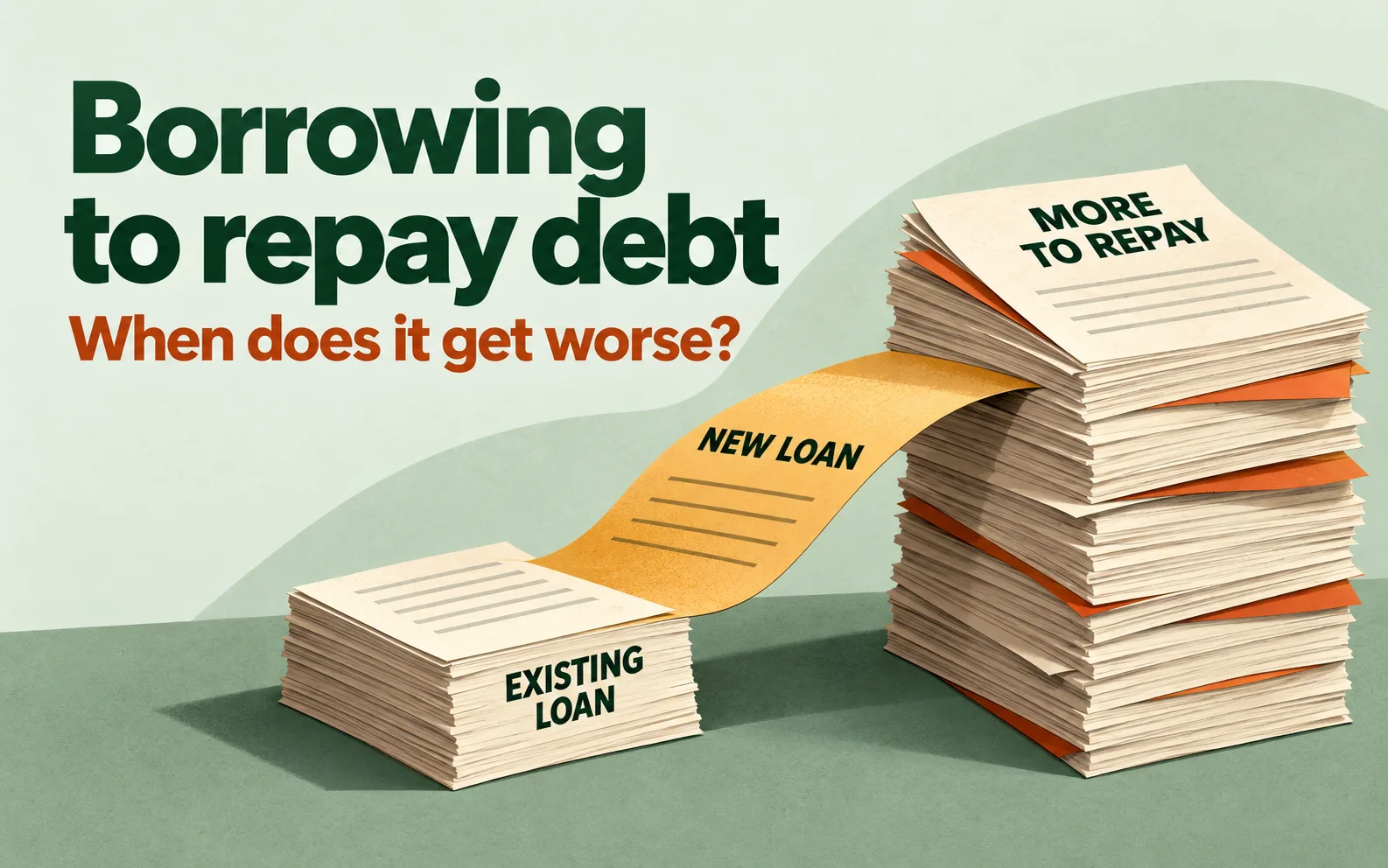
Compounding is neutral math,it rewards savers and it punishes borrowers who roll over unpaid interest.
As both FINRA and the CFPB warn when you carry an unpaid revolving credit card balance overdraw an account or let unpaid interest capitalize onto a loan principal you pay interest on accrued interest. If you owe money on a high-interest digital loan or credit facility charging 4% to 10% per month while your savings earn 12% per annum (roughly 1% per month) the debt is compounding against you four to ten times faster than your savings are growing. Clearing high-interest compounding debt almost always delivers a higher guaranteed return than leaving cash in a low-yield savings account.
How to Build and Monitor Your Compounding Routine
Getting compound interest to work for you is less about finding a secret high-return scheme and more about maintaining an uninterrupted system. Follow these steps to set up your savings and monitor your progress:
- Separate your spending account from your compounding account: Keep one bank account for daily transfers airtime and bills and a completely separate account or SEC-regulated Money Market Fund for savings. That single boundary prevents you from crossing the CBN's four-withdrawal monthly limit.
- Turn on automatic reinvestment: Log into your mutual fund or savings dashboard and verify that your interest or dividend setting is switched to Reinvest not Payout to Bank.
- Automate payday contributions: Set a standing order for the morning your salary arrives so your monthly contribution moves before routine expenses expand to fill your balance.
- Track your compounding health quarterly: Use the review framework below to make sure fees withdrawals or idle cash aren't silently slowing your growth.
What to Check | How Often to Review | What It Tells You | Next Action to Take |
Monthly withdrawal count on bank savings | Last day of every month | Whether an emergency transfer crossed the CBN's 4-withdrawal limit and forfeited your monthly interest | Move emergency buffer cash into an account or fund that does not penalize your core savings balance |
Dividend / coupon reinvestment status | Every quarter (Jan Apr Jul Oct) | Whether quarterly Money Market Fund dividends or FGN Savings Bond coupons are compounding or sitting idle in a spending account | Enable auto-reinvestment on mutual funds; manually sweep bond coupon payouts into a compounding fund on payment day |
Net effective yield vs. inflation & benchmark rates | Every 6 months | Whether your account's net rate (after 10% WHT or management fees) is keeping pace with Treasury Bill and Money Market rates | Shift long-term idle balances above your emergency buffer from basic bank savings into higher-yielding SEC-regulated funds or FGN bonds |
Deposit concentration per institution | Annually | Whether your balance in a single commercial bank (₦5m limit) or microfinance bank (₦2m limit) exceeds NDIC deposit insurance coverage | Spread large cash reserves across multiple licensed institutions or sovereign FGN securities |
Sources and review
Written by Sam Olumide. Reviewed and published by Fincalcz Editorial Team. Last updated November 1 2026. This article is for educational and informational purposes only and does not constitute individualized financial investment tax or legal advice. Always review the official product prospectus or account terms and consult a licensed financial professional before making investment decisions.
- U.S. Securities and Exchange Commission (SEC) , Investor.gov: What is compound interest? and Glossary: Rule of 72 , Used for the core definition of compound interest the mathematical distinction between simple and compound interest and the Rule of 72 doubling-time formula.
- Consumer Financial Protection Bureau (CFPB): How does compound interest work? and Financial Industry Regulatory Authority (FINRA): 5 Steps to Take Control of Your Finances and Investor Education Resource Guide , Used to corroborate how compounding frequency affects savings growth the Rule of 72 and how compound interest operates in reverse on unpaid debt balances.
- Central Bank of Nigeria (CBN): The Guide to Charges by Banks Other Financial and Non-Bank Financial Institutions Monetary Policy Committee Communiqué No. 164 (September 2026) and CBN Macro Economic Indicators , Used for Section 1.2 savings account minimum interest rules (minimum of 30% of MPR per annum forfeited when a customer makes more than 4 withdrawals in a month) and September/October 2026 Nigerian benchmark rates (23.00% MPR 14.63% headline inflation and 15.5% 91-day Treasury Bill rate) corroborated by Channels Television's report on the 307th MPC decision.
- Debt Management Office (DMO) Nigeria: FGN Savings Bond Portal & Offer Circulars and FGN Savings Bond Offer Structure , Used for FGN Savings Bond subscription rules (₦1000 per unit ₦5000 minimum subscription ₦50000000 maximum) quarterly coupon payment schedules and tax-exemption status corroborated for the October 2026 offer rates (13.071% p.a. for 2-year and 14.071% p.a. for 3-year) by The Whistler and Nigeria Housing Market.
- Securities and Exchange Commission (SEC) Nigeria: New Rules and Amendments on Collective Investment Schemes and Money Market Funds and PwC Worldwide Tax Summaries: Nigeria , Corporate and Investment Income Determination , Referenced for the regulatory structure of Nigerian Money Market Funds unit trust dividend treatment and the 10% Withholding Tax (WHT) applicable to bank deposit interest.
- Nigeria Deposit Insurance Corporation (NDIC): About NDIC & Statutory Mandates and NDIC Frequently Asked Questions (FAQs) , Used for statutory deposit insurance coverage limits of ₦5000000 per depositor in Deposit Money Banks (DMBs) and Mobile Money Operators (MMOs) and ₦2000000 in Microfinance Banks (MFBs) Primary Mortgage Banks (PMBs) and Payment Service Banks (PSBs).